
Individual needs · Individual support
See the person.
Support their possibilities.
Explore the supported-living pathways Brooks considers for adults and young people transitioning into adulthood. Every conversation starts with the person.

Who we support
A pathway shaped around you.
Explore the approach that best matches the needs you want to discuss. Suitability and the support package are always assessed individually.
Learning disability support
Daily living skills, confidence and community participation.
Transition to adulthood
A considered move into adult services, at the person’s pace.
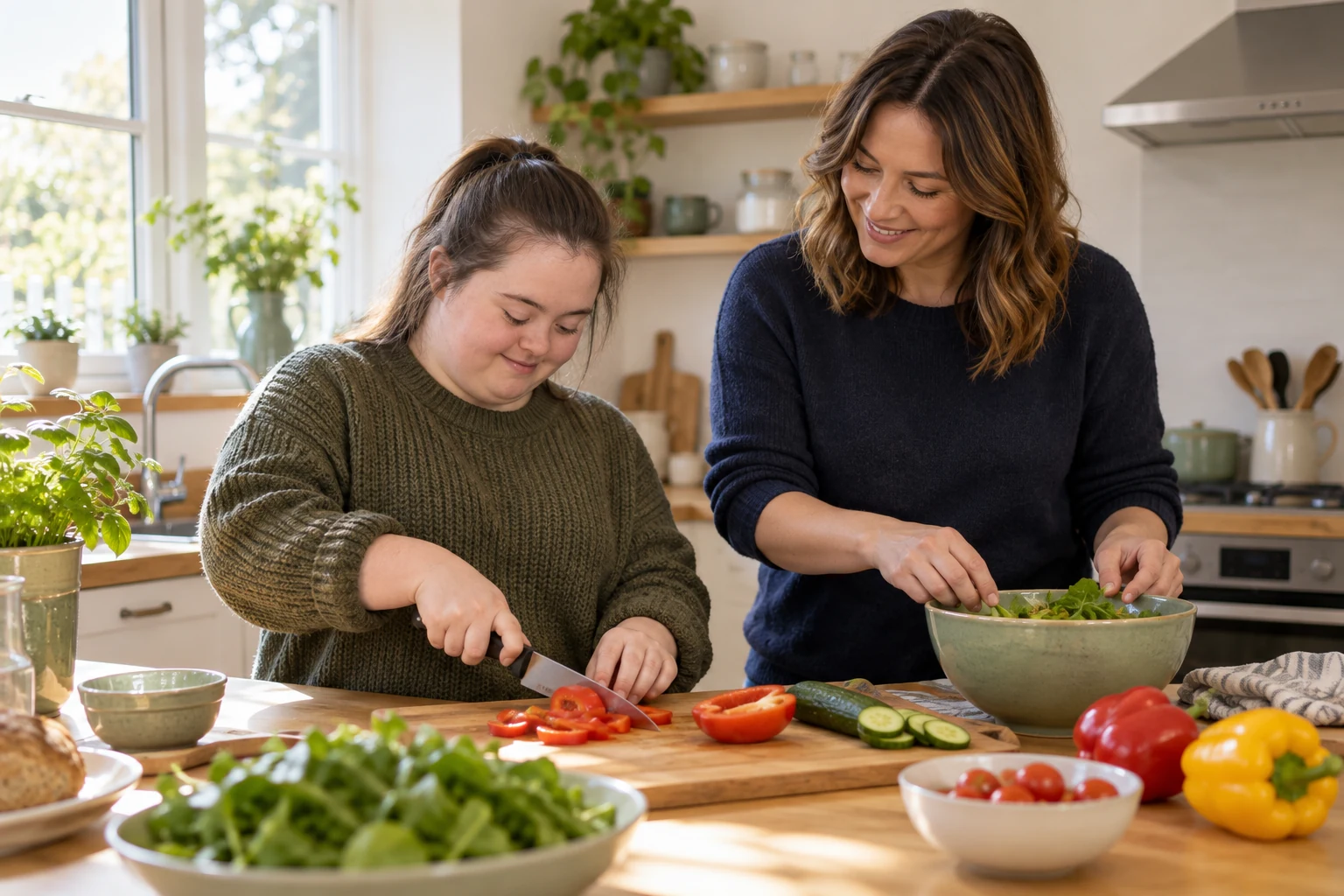
The things that make us individuals
Routines. Relationships.
Reasons to look forward.
Understanding communication, sensory preferences, daily routines and personal goals helps shape meaningful support. The person’s strengths and choices remain central to planning.
Planning together
A shared understanding of the right support.
Listen carefully
Learn about communication, preferences, strengths and what matters to the person.
Assess thoughtfully
Consider needs, risks, compatibility and the support arrangements required.
Work together
Involve the person, family and relevant professionals in planning the next steps.
Planning a move into adulthood?
Families, social workers, SEND and transition teams can begin discussions before a planned move into adult services. Adult supported-living placements are for people aged 18+.
Looking for care at home?
Our care-at-home routes are separate from adult supported living.
Confidence in your choice
Clear information about our service, your privacy and how to raise a concern.
Start a conversation
Tell us about the person, not just the referral.
Start a conversation about the support they need and the life they want to lead.